


Why Tic Frequency Changes in the Summer
Summer is upon us and it’s a perfect time to observe and become aware of your child’s tic pattern. The summer can either slow tics down or ramp them up. Knowing how your child’s tic react in the summer time can provide a wealth of information that will help you better understand tics throughout the year.
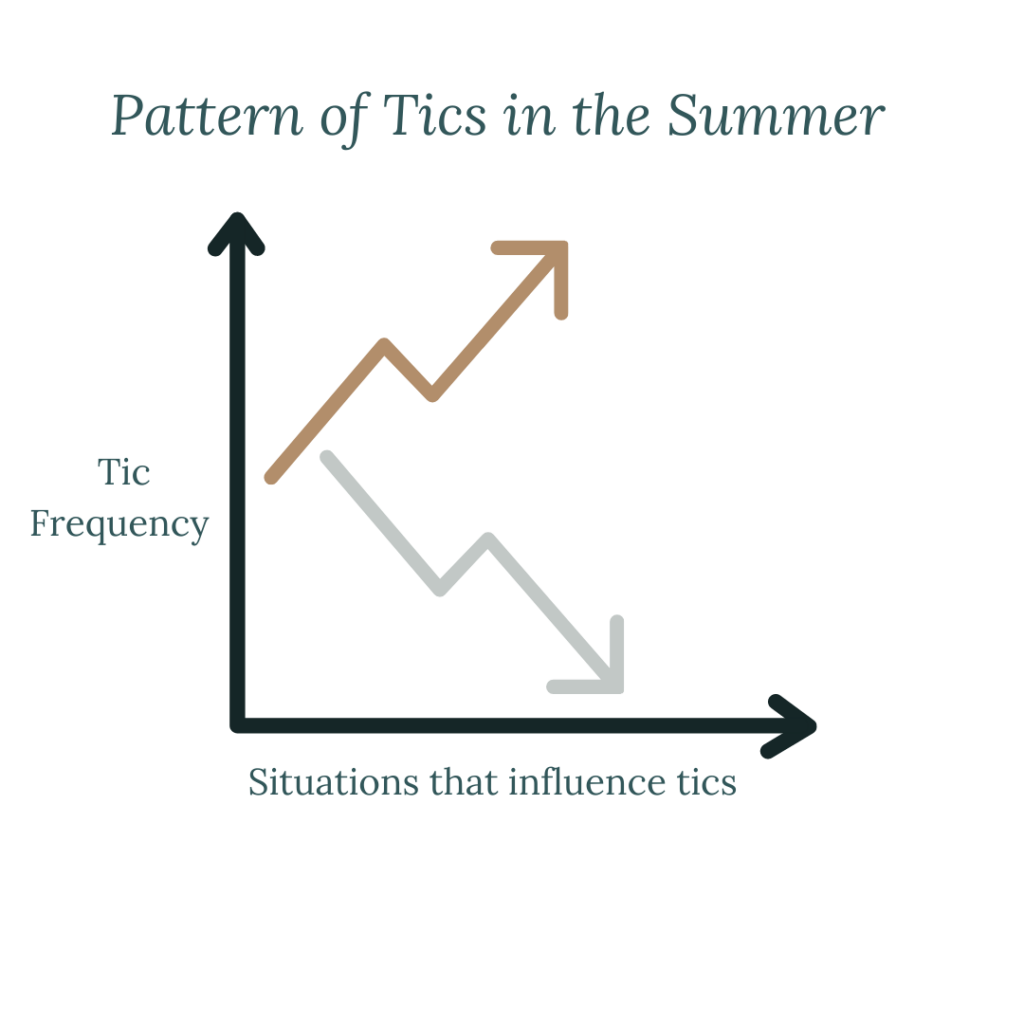
Why tics increase and decrease throughout the year
Tics are highly influenced by changes inside and outside the body. Stress, excitement, anger, sadness, illness can all increase or decrease tics. Additionally, new situations, sensory information (touch, temperature, lights, sounds, etc.) can also increase or decrease tics. What influences tics can be unique to each person. Although tics are often random, there’s usually a subtle pattern to their fluctuations.
Why tics INCREASE in the Summer
Some people really thrive on routine and structure. They do well when they are consistently focused and challenged. For some, tics are typically less in these situations. In the summer, schedules are variable and there’s less work to focus on (school-related), bedtime changes, and there’s typically more excitement and less structure. Although this is generally positive, it can increase the likelihood of tics occurring. Tics don’t discriminate with emotions and feelings. Even when people are very happy and enjoying the summer season, tics may tag along.
Why tics DECREASE in the Summer
For those who do not thrive under structure and intense focus, maybe even those with an anxious personality, the summer is a breath of fresh air. Those who are anxious during the school year with the pressures of grades and testing find a lot of relief and joy in the summer. You might have recognized this pattern during winter and spring breaks…less tics when there’s less pressure on them. If this is a pattern for your child, it might be beneficial to explore the root cause of the increase during the school year. Anxiety is a common trigger for children in school. It may be the social pressure, fear of failure, worrying about others seeing their tics, getting in trouble, etc. Some children may have experience an increase in tics during the school year because of a Learning Disability making it more stressful and difficult for them to learn the information. On the other hand, children with ADHD may struggle with tics in school because of the demands to maintain seated for extended periods of time, difficulty staying on task, and even the worry that they may get in trouble if they lose focus and miss information.
What you can do about the INCREASE
When tics are increased and impacting a person’s ability to enjoy the things that they find meaningful, modifications should be made so that they thrive and not let tics get the best of them. Here’s a few ideas for kids who’s tic increase in the summer:
- Provide a structured routine that allows flexibility
- Maintain bedtime and morning routine
- Limit excess sugar and caffeine
- Decrease screen time and increase outdoor or physical activities
- Find the few activities that calm tics (art, music, reading) and implement throughout the day
- If the child is old enough, teach them how to explain tics to their peers in a simple manner, in case the get questioned. “They’re my wiggles,” “It’s twitch that happen sometimes,” or “My body does it sometimes, like a cough or sneeze.”
Leave a Reply
Tic Presentation Checklist
A practical guide to help families, educators, and providers distinguish between typical and functional tics and support informed decisions about care and treatment

Tic Symptom Checklist
A comprehensive checklist to track motor and vocal tics, related behaviors, and patterns to support monitoring and communication with healthcare providers.
Supporting Students in School
A parent-friendly guide to help teachers understand tics, respond appropriately, and implement classroom strategies that support students’ learning and well-being.


